
Samsung is already laying the groundwork for its next major shift in foldable hardware. Fresh rumors from the Korean supply chain suggest the Galaxy Z TriFold 2 won’t just be a spec bump; it’s getting a ground-up hinge redesign. The goal is clear: make a triple-panel device that doesn’t feel like a brick in your pocket. Having tracked the Fold series since the original “hinge-gap” days of 2019, I’ve learned that Samsung doesn’t swap out core mechanical parts unless they’ve hit a wall. A new hinge architecture usually means the entire chassis is being re-engineered from scratch.
The Road to Sub-9mm: Samsung’s Progress So Far
Samsung’s recent trajectory proves they are obsessed with thinness. The Galaxy Z Fold 7 (released July 2025) was a turning point, dropping to just 4.2mm unfolded and 8.9mm folded. That wasn’t just a “refinement”, it was a total structural rethink that made the Fold 6 (at 12.1mm) look ancient by comparison.
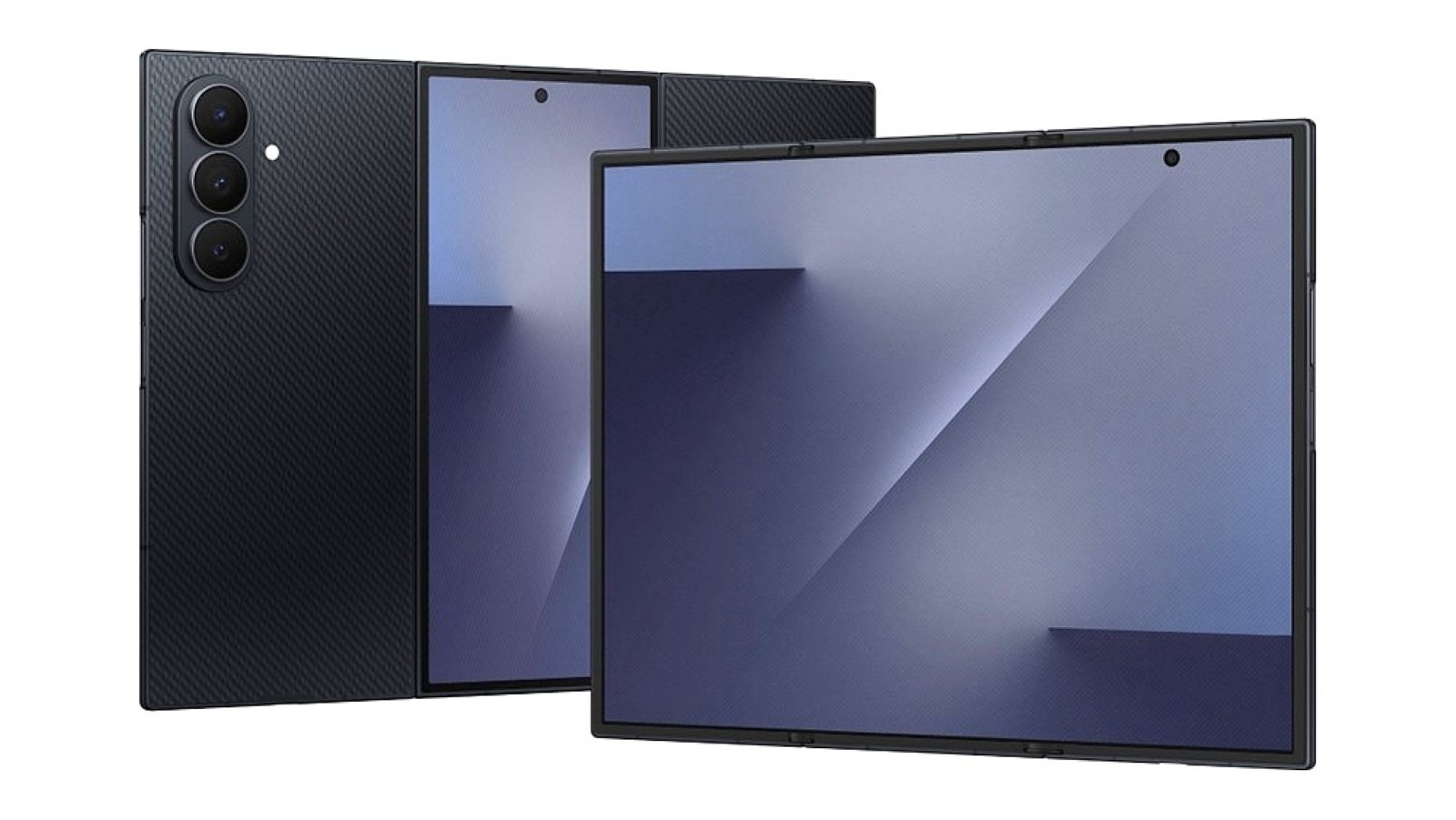
The original Z TriFold took that “Armor FlexHinge” tech and stretched it across three panels. While achieving a 12.9mm folded profile for a triple-screen device was an engineering feat, it still felt experimental. With the TriFold 2, Samsung is moving past the “proof of concept” phase.
The “New Hinge” Leak: What’s Actually Changing?
The latest intelligence points to a hinge system built around two priorities: shaving weight and collapsing the Z-height.
This isn’t just about making parts smaller. A total redesign suggests Samsung is moving toward a more integrated, “fluid” link system. In foldables, the hinge is the single point of failure, it dictates the screen crease, the internal “feel,” and how much dust gets trapped. If the rumors are right, this new system is Samsung’s answer to the mechanical limitations that made the first TriFold a limited-release “beta” device.
The Competitive Heat: Vivo, Oppo, and Huawei
Samsung isn’t innovating in a vacuum. Chinese manufacturers have been aggressive:
- Oppo Find N5/N6: These have already hit the 8.9mm folded mark.
- Vivo X Fold 4: Maintains a remarkably slim 4.4mm unfolded profile.
- Huawei Mate XT: Currently, the TriFold benchmark is at 3.6mm (at its thinnest point).
For Samsung to win, the Galaxy Z TriFold 2 has to match these dual-fold dimensions while managing two independent hinges. It’s an exponential jump in difficulty, but it’s the only way to stay relevant as Apple continues to linger in the background with its own foldable patents.
Platform Engineering: One Hinge to Rule Them All?
The most interesting part of this leak is the “Scale Factor.” Sources indicate this new architecture won’t stay exclusive to the TriFold. We will likely see a modified version of this “Ultra-Slim” hinge in the Galaxy Z Fold 8 and Z Flip 8 later in 2026.
By standardizing the hinge across the lineup, Samsung can drive down production costs and finally bring “TriFold” tech to a more palatable price point.
The Veteran’s Take: Engineering Reality vs. Marketing Hype
Every millimeter Samsung removes from the hinge is a millimeter stolen from somewhere else. As someone who has spent years digging through One UI firmware test builds (like the recent S94x strings), I know that hardware changes often trigger thermal and battery warnings in early software.
- Thermals: A thinner hinge means less room for vapor chambers. Samsung will need to lean heavily on the Snapdragon 8 Elite’s efficiency to prevent the TriFold 2 from throttling.
- Battery: The current TriFold uses a 5,600mAh silicon-carbon battery. Shrinking the hinge further puts immense pressure on battery density; expect Samsung to push for even higher silicon content to keep the lights on.
Global Expansion: The Final Piece of the Puzzle
The biggest complaint about the original TriFold wasn’t the thickness; it was the fact that you couldn’t buy it. The mid-2027 target for the TriFold 2 reportedly includes a full global rollout. If Samsung nails this hinge, the TriFold 2 could be the first triple-folding phone that actually makes sense as a daily driver.



Leave a comment